
- Welcome Guest
-


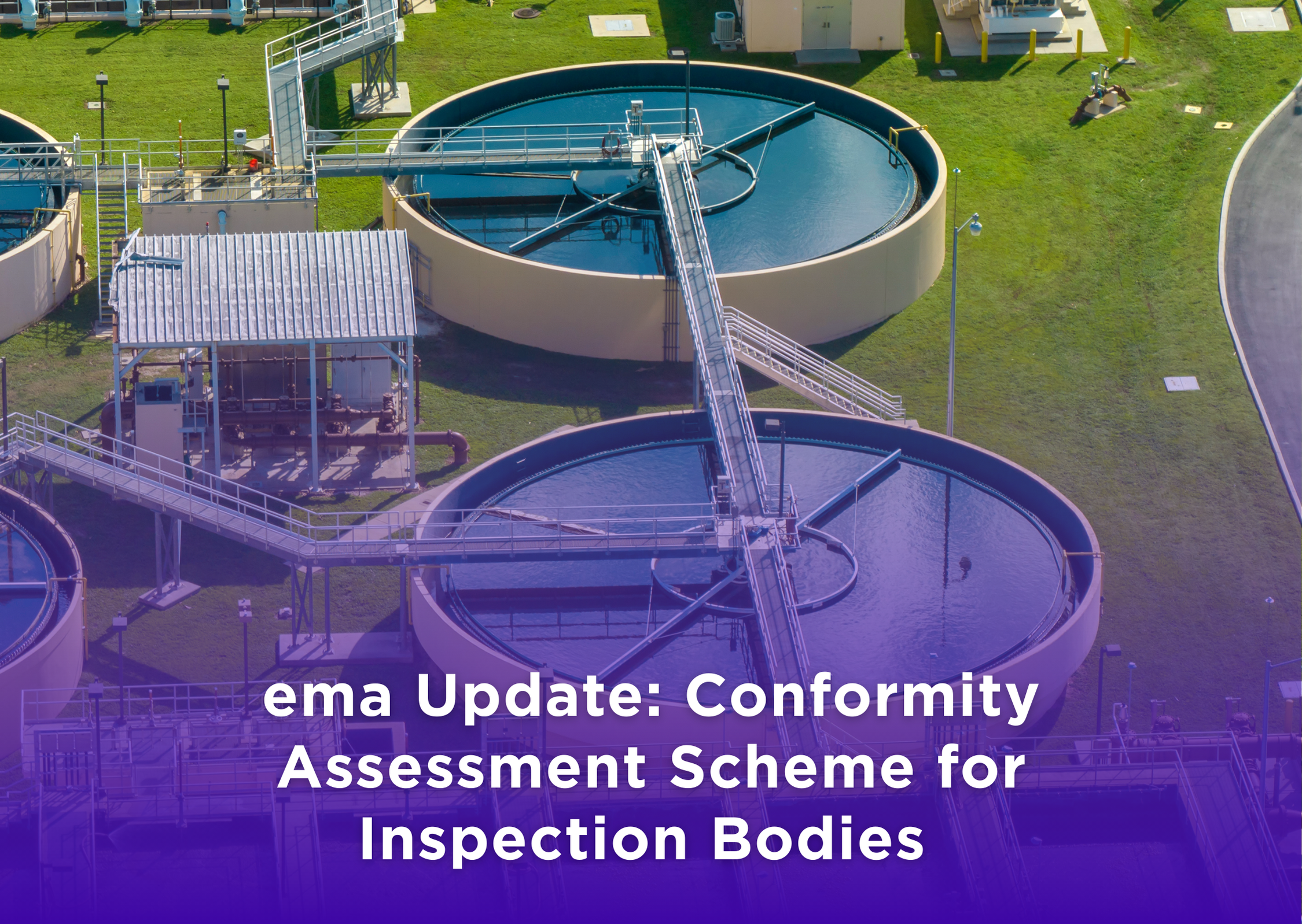
Accreditation of Inspection Bodies for the Conformity Assessment of the NMX-AA-179-SCFI-2018 Standard: Measurement of Volumes of National Waters Used, Exploited, or Utilized
The extraction of national waters from bodies owned by the Nation constitutes a fundamental component for achieving integrated, transparent, and efficient management of water resources. This activity supports not only the sustainable use of water but also the protection of public interests as established in the National Waters Law. Ensuring that water extraction aligns with regulatory provisions is essential for preserving availability, promoting equitable access, and supporting long-term hydrological balance within the country.
However, in the current operation and monitoring of national water use across the territory, a principal-agent problem often arises. This challenge stems from information asymmetries between water users and authorities, particularly concerning the actual volumes of water extracted. Such asymmetries may lead to inefficiencies in resource use, hinder effective water planning, and, in some cases, create opportunities for underreporting the volumes extracted. When precise and reliable data are not available, authorities face significant limitations in enforcing regulations, establishing appropriate water allocations, and designing public policies grounded in real-world conditions.
For this reason, the accurate measurement of volumes of national waters used, exploited, or utilized has become a critical mechanism for addressing these information gaps. Precision in measurement contributes to several key objectives, including:
Given this context, it is of great importance that Inspection Bodies accredited under ISO/IEC 17020:2012 carry out inspections to verify the proper operation of measuring devices and systems used for the utilization and exploitation of national waters. These inspections include assessing the methodology for volume measurement and the procedures for transmitting measurement data to the National Water Commission (Comisión Nacional del Agua). These verifications help ensure consistency, traceability, and reliability throughout the entire measurement process.
Currently, there are 19 accredited Inspection Bodies operating under this scheme. Their participation strengthens national efforts to improve water management practices, uphold regulatory compliance, and enhance the availability of trustworthy technical information.
This accreditation program represents a successful case of collaboration between the accreditation body and national regulators. It demonstrates how coordinated actions can reinforce confidence in conformity assessment results, support public policy objectives, and contribute significantly to the sustainable management and long-term preservation of vital natural resources.
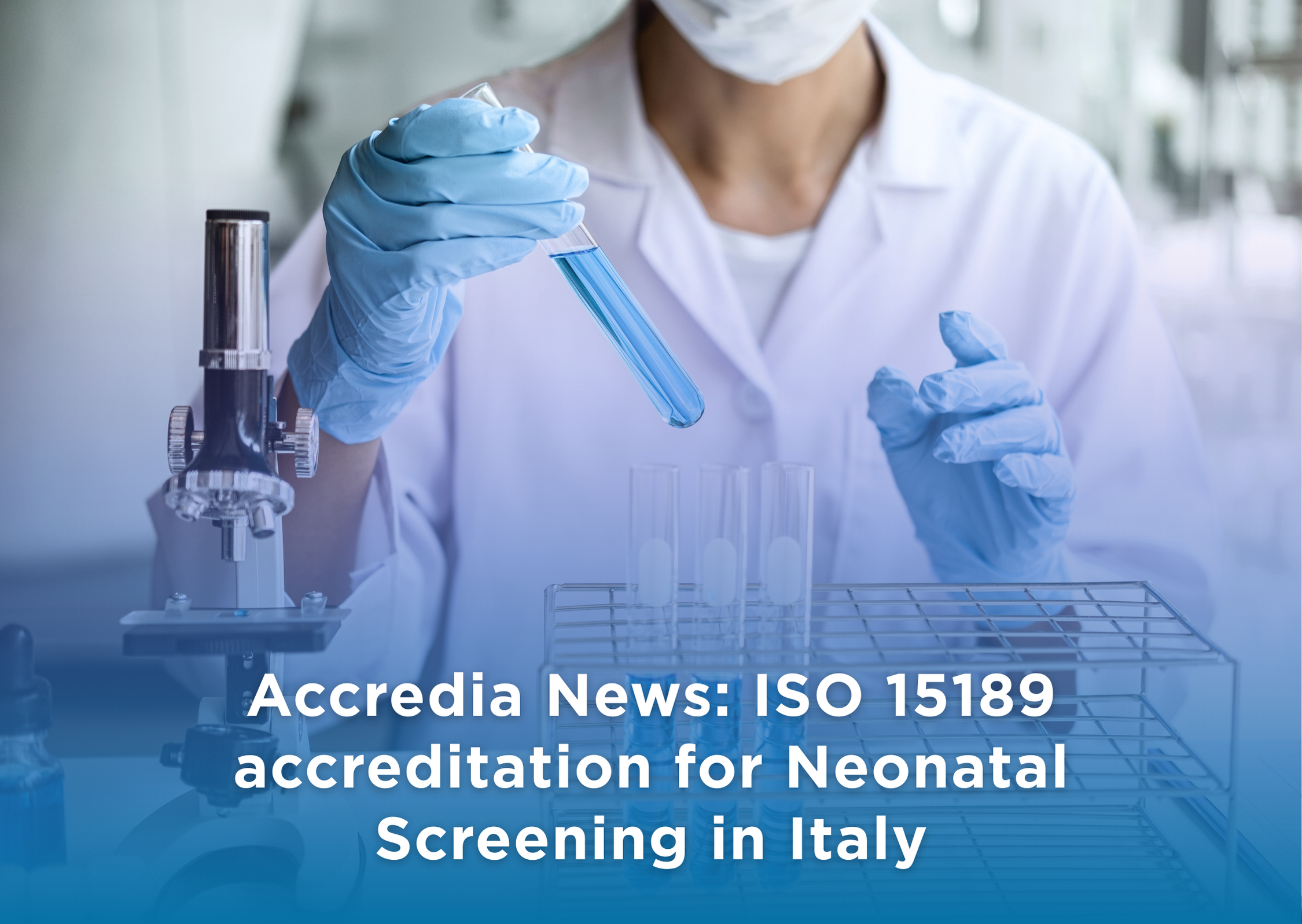
After consolidating the application of the ISO 15189 accreditation standard in traditional laboratory medicine disciplines, Accredia, the Italian Accreditation Body, is extending accreditation to medical analysis laboratories that perform neonatal screening.
Extended newborn screening (ENS) is one of the most advanced areas of preventive healthcare. Through a drop of blood collected in the first hours of life, ENS allows for the early detection of over 50 rare diseases. This improves the quality of life for patients and their families while reducing costs for the National Health Service.
In Italy, screening is regulated by Law 167/2016, which provides for mandatory neonatal diagnostic tests to prevent and treat hereditary metabolic diseases. However, the law’s effectiveness depends on the system’s ability to ensure uniform execution and reliable results. Currently, only some of the laboratories performing SNE are accredited by Accredia.
A project for individuals and society
ENS is a critical area of clinical and social importance, requiring a dedicated approach from the conformity assessment system. This approach should aim to build an accreditation model that respects the unique characteristics of the public health sector while guaranteeing technical competence and reliable results.
To begin this new chapter in laboratory medicine, Accredia has chosen to start by listening. The first objective was understanding the specific operational characteristics of screening programs, regional networks, organizational flows, and the needs of the professionals involved.
The project is now in the initial phase of stakeholder involvement—including healthcare institutions, scientific societies, professional associations, and citizen representatives—and the strategy will be gradual and participatory. It started with laboratories that have proven experience and well-established quality systems. Then, it will progressively extend accreditation to other centres according to a shared plan.
The strategy of dialogue and cooperation
This approach follows Accredia’s efforts to promote ISO 15189 accreditation for medical laboratories throughout Italy. These efforts began about a decade ago, when Italy was far behind other European countries.
Over the past eight years, Accredia has developed and consolidated the ISO 15189 accreditation system, achieving accreditation for 50 medical laboratories and establishing a national model based on collaboration, active listening, and the gradual implementation of requirements.
From the beginning, Accredia understood that the success of ISO 15189 accreditation depended on listening carefully to medical laboratory workers. To this end, the Accreditation Body collaborated with major Italian scientific societies, including SIBioC, SIPMeL, AMCLI, SIAPeC, and SIGU, which represent various disciplines within laboratory medicine.
Together, they defined the scope of accreditation using clear, discipline-specific language to bridge the gap between standard requirements and professional practice.
The national scientific societies also helped identify sector experts, who were then trained by Accredia to become technical assessors. Training sessions were organized to interpret the requirements and address challenging aspects such as measurement uncertainty, verification, and validation.
A gradual and realistic approach
A key element of the Italian experience was the progressive introduction of requirements, which allowed laboratories to adapt step by step. Accredia encouraged laboratories to begin with a limited number of validated examinations and extend their accredited scope during subsequent surveillance as their quality systems matured.
This pragmatic approach has been successful, helping in reducing difficulties, build confidence, and demonstrate that ISO 15189 accreditation can be a driver of improvement rather than a burden.
To promote a culture of quality and raise awareness among professionals and the general public about the value of competence and accreditation in healthcare, Accredia participated in scientific congresses, professional meetings, and television programs.
Meanwhile, Accredia collaborated with national and regional authorities to define requirements for medical laboratories. One notable example is the Autonomous Province of Trento, which, after developing a feasibility plan with Accredia, made accreditation mandatory for medical laboratories. This marked an important step toward harmonization and improved quality across the system.
All disciplines included
Today, all major fields of laboratory medicine — clinical biochemistry, hematology, microbiology, genetics, and pathology — are represented among accredited laboratories. Genetics, in particular, is experiencing significant growth, reflecting innovation and confidence in the accreditation process.
Accredia has also extended accreditation to pre-analytical processes and point-of-care testing (POCT), taking a comprehensive approach to quality throughout the diagnostic process.
Listening, supporting, and growing together
The Italian experience demonstrates that addressing professionals’ challenges, recognizing their expertise, and gradually introducing requirements are essential for developing a robust and shared accreditation system.
Through dialogue and cooperation, Accredia has helped laboratories view ISO 15189 as a trusted ally for improving quality, competence, and confidence in healthcare services rather than as an external obligation.

Brea, California — October 1, 2025 — The International Accreditation Service (IAS) held its 50th Anniversary Celebration Gala and Dinner on Thursday, September 25, 2025, at the Embassy Suites in Brea, California. Technical experts from 15 countries attended this milestone event which honored IAS’s legacy of trust, integrity, and leadership in accreditation services around the world.
Since 1975, IAS has become a globally recognized accreditation body, serving government agencies, commercial businesses, and public entities across a wide range of sectors. The 50th Anniversary Gala brought together key stakeholders, accreditation professionals, industry partners, and honored guests to celebrate five decades of service and progress.
The evening included a formal dinner, commemorative program, keynote remarks, and reflections on IAS’s evolution and impact across the accreditation landscape. A commemorative publication documenting the 50-year legacy of the organization was released as well as video documenting the legacy.
“This milestone is not just a celebration of our past, but a reaffirmation of our commitment to excellence in the years to come. We looked forward to honoring our dedicated staff, valued clients, and partners who have helped shape IAS into the respected organization it is today,” said Raj Nathan, President of IAS.
For more information, visit www.iasonline.org.

About IAS
IAS is a nonprofit, public-benefit corporation headquartered in Brea California that has been providing accreditation services since 1975. IAS accredits a wide range of companies and organizations including governmental entities, commercial businesses, and professional associations serving customers in 65 countries. IAS accreditation programs are based on recognized national and international standards that ensure domestic and/or global acceptance of its accreditations.
Mission: To protect lives and property through accreditation of competent organizations providing services, products, and oversight worldwide.
Vision: To provide the highest quality accreditation services for all concerned with public safety and sustainability through the principle of “One Test, One Inspection, One Certification Worldwide.”

The year 2025 marks another milestone in the journey of the Quality and Accreditation Institute – Centre for International Accreditation (QAI CIA), as we continue to expand our global presence and strengthen confidence in accredited conformity assessment services. Guided by our commitment to excellence, transparency, and international cooperation, this year has been both dynamic and transformative for our accreditation programmes.
The year 2025 has been an eventful and fulfilling for the QAI CIA. As we continue to grow and strengthen our presence across the globe, our focus has remained steadfast — to promote confidence in accredited conformity assessment services and foster collaboration within the international accreditation community.
Highlights from 2025:
|
We started the year on a celebratory note with the accreditation of our 100th By March, 150 applications had been registered under the Testing Laboratory |
 |
 APAC Evaluation Team (Vivekananthan Kulasingham-SCC Canada (extreme right) and Mrs. Sirorat Thonhamkaew-TISI Thailand (second from right) |
April brought two significant recognitions — QAI CIA achieved Mutual Recognition Arrangement (MRA) status for Calibration under both the Asia Pacific Accreditation Cooperation (APAC) and the International Laboratory Accreditation Cooperation (ILAC). These recognitions reinforce our commitment to global harmonisation and the acceptance of accredited results internationally. |
In May, we organised the Assessors Conclave, which brought together assessors to share experiences and insights focused on strengthening the competence and consistency of our assessment teams. Later that month, we conducted an Assessor Training Course on ISO/IEC 17025:2017 to enhance our assessor resources.
| June marked our first onsite celebration of World Accreditation Day, a wonderful opportunity to honour the contributions of our assessors, laboratories, and stakeholders who make accreditation meaningful. |  |
 |
In July, we hosted an awareness seminar in Thimphu, Bhutan, for Testing, Calibration, and Medical Laboratories. (First of its kind in Bhutan) |
This was followed by the receipt of our first application for a Mobile Medical Laboratory as per ISO 15189 and the accreditation of our first Reference Material Producer (RMP) as per ISO 17034:2016.
| QAI strongly believes in collaboration. We are very pleased to share that QAI CIA signed a Memorandum of Understanding (MoU) with the National Centre of Accreditation (NCA) of the Republic of Kazakhstan in the month of July on the sidelines of APAC Annual Meetings in Bengaluru, India. |  |
This collaboration will explore opportunities for both organisations to work together to facilitate trade between the two countries and strengthen each other’s technical capabilities.
August continued the momentum with the accreditation of our first Inspection Body under ISO/IEC 17020:2012.
We were also honoured to receive an application from the Ministry of Energy and Natural Resources, Thimphu, Bhutan, for testing laboratory accreditation. The month concluded with a productive update meeting with our Lead Assessors.
October was rewarding, we granted accreditation to two Government Testing Laboratories in Lebanon in partnership with the United Nations Development Programme (UNDP). QAI CIA also accredited the first Mobile Medical Laboratory and the first ISO 15189 accredited Medical Laboratory in Bahrain — remarkable milestones that underscore our growing international outreach. Additionally, we accredited the Bureau of Indian Standards (BIS) Laboratory in Patna, further strengthening national quality infrastructure.

We remain committed to building a future rooted in trust, competence, and collaboration. Each achievement in 2025 reflects the dedication of our team, assessors, and partners who continue to make accreditation a cornerstone of quality worldwide.

The 9th Conclave for Proficiency Testing Providers (PTPs) and Reference Material Producers (RMPs) successfully conducted on 21-22 August 2025 in Chandigarh, India. This conclave is being conducted since 2017, consistently in the month of August.

The conclave emphasizes India’s commitment to lead efforts to build a culture of quality by making available PT schemes and reference materials at optimum cost as well as nurture budding talent. It’s an open platform for information sharing and discussions by PTP’s on design and plan of robust and innovative PT schemes as well as demonstration of scientific and technical competence to produce reference materials by RMPs. The conclave was hosted by the Green Economy Initiatives Private Limited, Zirakpur (winner of 8th PTP-RMP Conclave).
More than 180 participants have attended the conclave. The accredited PTPs and RMPs showcased their PT schemes and/or Reference materials in a competitive mode through presentations, posters and exhibition/stall. The Presentations/Posters were evaluated by a panel of experts in accordance with predefined criteria.
Following top three presentations and posters were awarded during the conclave:
First – Envirocare Labs Private Limited – PT Cell, Thane
Second – IOCL Proficiency Testing Provider, Eastern Regional Laboratory, Howrah
Third – Hi Tech Calibration Service Private Limited – Proficiency Testing (PT Provider) – PT Division, Chennai
First – CRM Unit, AAC Division, CSIR-National Metallurgical Laboratory, Jamshedpur
Second – HPCL RMP, Quality Control Laboratory, New White Oil Terminal, Visakhapatanam
Third – RML Quality Assurance Private Limited, Lucknow
Edition: 10th PTP/RMP Conclave 2026
Date: 20-21 August 2026
Venue: Mumbai, Maharashtra, India
Registration details will soon be available on NABL, Website (www.nabl-india.org).
Ms. Anita Rani Director & Head – PTP & RMP Accreditation Program National Accreditation Board for Testing and Calibration Laboratories (NABL) J200, World Trade Centre, Nauroji Nagar, New Delhi – 110029, India Phone: +91-11-40050532 Website: www.nabl-india.org Email: anita@nabl.qcin.org
|
|
 |

JAB’s mission is to:
① preserve the global environment and protect and maintain the natural environment;
② stabilize and improve the lives of citizens by promoting fair and free economic activities; and ③ protect and enhance consumer interests.
JAB works to achieve these goals. Since its establishment as an accreditation body in 1993, JAB has accredited laboratories, calibration laboratories, inspection bodies, reference material producers, proficiency testing providers, medical laboratories, and certification bodies that comply with international standards, while promoting mutual recognition with overseas accreditation bodies.
In recent years, JAB has launched biobank accreditation and currently accredits five biobanks. To further enhance the value of accreditation at JAB, it aims to expand the MRA for biobank accreditation through the 2025 APAC Peer Evaluation.
To promote international standardization and the accreditation system in Japan, JAB is focusing on promotion through face-to-face seminar and webinars. We will introduce some recent initiatives as follows.
JAB hosted JAB Platform in Tokyo
JAB holds an annual lecture series called the JAB Platform to promote the conformity assessment system. This year, it was held on October 14, 2025, with the following objectives:
Here are some of the program highlights.
1) Authorized Assessor Roundtable: “JAB Authorized Assessors Discuss the Reality of Assessing and Career Paths”
To promote recruitment of authorized assessors, we invited active authorized assessors to participate in a panel discussion. They introduced the rewards, challenges, and social significance of the authorized assessor profession. They shared information, including real-world experiences from the assessing field, intended to be useful for those aspiring to become authorized assessors in the future or interested in career paths.
2) Special Lecture: “Case Studies of ISO/IEC 17025 Utilization in Local Governments”
A laboratory from a local government accredited by JAB presented on the theme of “Ensuring Test Reliability.” Based on their laboratory’s initiatives, they discussed the benefits of ISO accreditation utilization within local governments.

3) Standard Explanation Session: “Key Points for Meeting ISO 15189 Requirements”
JAB explained the essential points needed to meet the standard requirements. This included the status of transition assessments to ISO 15189:2022, insights into the impact of the standard revision, and its benefits.
4) Standard Explanation Session: “Key Points for Meeting ISO/IEC 17025 Requirements”
By introducing actual examples of JAB accreditation assessments, the session highlighted that JAB’s ISO/IEC 17025 accredited laboratories ensure reliability through appropriate operation and assessing. It encouraged stakeholders to utilize JAB accredited laboratories. Additionally, it explained the use of flexible scope accreditation to laboratory and calibration service personnel, emphasizing how it can lead to business opportunities.
Supporting the quality of medical testing for 20 years
In Japan, The ISO 15189 accreditation program for medical laboratories was launched in 2005 by the Japan Accreditation Board (JAB), and reached a major milestone in 2025, its 20th anniversary.
The fact that it has been adopted as a requirement for medical institutions conducting clinical trials and clinical research, and cancer genome medical institutions, and that it was approved for medical fee incentives in 2016, means that the government has recognized that this accreditation system guarantees the quality of medical laboratories. These are great achievements of JAB.
The risk based approach strengthened by ISO 15189:2022 is essential in medical testing, and by effectively incorporating it into medical laboratory management systems, the ISO 15189 accreditation program is expected to further contribute to patient safety and security.
At present, the number of accredited medical laboratories is only about 300, which is fewer than in other countries. JAB believes it has a mission to continue to appeal to the public to further popularize this program.
In December 2025, JAB plans to hold a commemorative event, inviting all those involved who have contributed greatly to the past 20 years, including accredited laboratories and assessors.
JAB ISO 20387 Event, 20387 Accreditation Briefing Session,
“Deepening the Potential of Biobanks through the Utilization of ISO 20387,”
JAB began ISO 20387 accreditation program on April 1, 2024, and has now accredited five biobanks.
The accredited biobanks include one integrated biobank facility (Tohoku Medical Megabank Organization, Tohoku University (RBB00010)) and three clinical biobanks (National Center for Geriatrics and Gerontology (NCGG) Biobank (RBB00020), National Center of Neurology and Psychiatry (NCNP) Biobank (RBB00030), Clinical Bio-Resource Center / Kyoto University Hospital / National University Corporation, Kyoto University (RBB00040)), and one on-demand biobank (National University Corporation Kobe University Hospital Bioresource Center (RBB00050)). The legal entities of these five biobanks are universities and national research and development corporations; no private biobanks have been accredited.
Therefore, to promote broader societal understanding of the ISO 20387 accreditation system and to further advance the utilization of accredited biobanks, the first online ISO 20387 Accreditation Briefing Session, titled “Deepening the Potential of Biobanks through the Utilization of ISO 20387,” was held on October 24, 2025.
The briefing featured the following four presentations:
Participants included 20 from accredited biobanks, 9 from non-accredited biobanks, 27 from related organizations and biobank users, 1 from a relevant government ministry, and 2 from the media. We believe the briefing achieved its objectives.
Metrological Traceability Seminar
Every year, the National Institute of Technology and Evaluation (NITE), the Japan Quality Assurance Organization (JQA), and JAB come together to host an important event called the “Metrological Traceability Seminar for Management Systems.” This seminar is designed for a wide range of people, including auditors who check management systems, quality assurance professionals working in manufacturing companies, and those in charge of quality control in laboratories.
At the seminar, attendees learn about Japan’s current state of measurement traceability, including how the system for registering calibration laboratories works, based on the Measurement Act. The seminar also explains the laboratory accreditation system under ISO/IEC 17025, how national measurement standards are aligned with international agreements like the CIPM MRA, and why it’s so important to connect measurement traceability to the international SI units. Additionally, there is useful information on how to properly manage measuring instruments.
The main goal of the seminar is to equip participants with accurate, up-to-date knowledge on metrological traceability. It also encourages the use of calibration certificates that carry the ILAC MRA combined symbol, which helps ensure reliability and trust in measurements across borders.
JAB participated in ifia JAPAN 2025
JAB participated in ifia JAPAN 2025, held from May 21 to 23, 2025. The ifia has a 29-year history as a specialized exhibition for food ingredients and additives, and JAB delivers a presentation on ISO/IEC 17025 at this exhibition every year. At this year’s Safety Assessment and Precision Management session, JAB presented “ISO/IEC 17025 Accreditation to Ensure the Reliability of Test Results.” The presentation focused on food microbiology laboratories, using case studies to explain facility and environmental conditions, verification and validation, and ensuring the validity of results. The session attracted many attendees, including government officials, food analysis institution personnel, and food manufacturing professionals.
Additionally, JAB exhibited an information booth at the venue, providing accreditation information to many visitors. We intend to continue explaining the necessity and usefulness of accreditation to the food industry, which underpins the public’s livelihood, and contribute to fostering a quality foundation.
Going forward, JAB will continue to contribute to the government’s “Japan Standard Acceleration Model 2025” and “New International Standards Strategy” to promote Japan’s international standardization and accreditation systems, while focusing on marketing efforts.


As a young assessor and enthusiastic accreditor budding in the mid-90s, my first introduction to ILAC (International Laboratory Accreditation Cooperation) was during the early 2000s when the fortification of the primary group of 36 full members was signed in Washington DC. This was an emotional, highly anticipated and technically intriguing moment for those who were near, far and for those directly or indirectly influenced by conformity work.
Every single existing accreditation body (AB) or those under development during that period were filled with awe, apprehensions and more importantly did not realise the effect it would have in years to come. Many did not grasp or understand the fundamental objectives of ILAC at that time, because of the need to focus on reducing technical trade barriers and the importance of acceptance of accreditation bodies by regulators. There was a fundamental need for global market cohesion and the future existence of ILAC depended on regulatory acceptance. However, many existing accreditation bodies were not fully designed to handle the vast majority of testing, calibration and inspection activities within and beyond their national borders. Government and Regulators were not ready to hand over their reins to self-acclaimed third-party accreditation bodies, in fear of having lower technical vigilance over domestic, export and import markets.
The founders of ILAC were men and women of integrity and strength. They were leaders, mentors and role models for many. All those accreditors and accreditation bodies that wished to track their path of safeguarding impartiality, independence, trust, transparency and technical rigor soon followed in their promising footsteps and have now become leaders in their own right for many ABs around the world. Since then, ILAC has done plenty to promote the acceptance of endorsed reports and certificates across governments, regulators, national and state borders. This is and shall be, the full member accreditation bodies’ invaluable contribution and testament to the current acceptance of ILAC across many international spheres in WTO, ISO, UN, geographic regions and many more circles, boasting over 121 signatories to the ILAC Mutual Recognition Arrangement (MRA), to date. The MRA means signatories have formally agreed to accept the results of each other’s accredited conformity assessment bodies as equivalent. If the value proposition of this obligation becomes delusional, then going forward, the ILAC MRA may suffer consequences in promoting free trade. Maintaining this obligation has become an uphill challenge.
ILAC’s expansion from offering acceptance of 2 scopes (testing and calibration) in 2000 to a formidable technical variety of scopes over the last 25 years since its incorporation in 1996 is impressive, largely, due to the vigilant work by the respective secretariats, multi-lateral control of tasks and the passionate and intense support from many technical volunteers from across the globe. Those volunteers inadvertently played crucial roles in keeping ILAC relevant and ‘in the moment’, enabling ILAC to achieve its practical objectives in a planned and harmonious manner. This ethos cascaded into ILAC’s regional cooperation bodies and their regional secretariats who further continued to work tirelessly around the clock to ensure their members are managed, informed, educated and held accountable for their decisions. THE VOLUNTEERS ARE THE TRUE PILLARS OF ILAC.
ILAC largely relies on ISO for the generation of standards intended for the application in laboratories, inspection bodies and other types of conformity assessment activities. The signatory accreditation bodies under ILAC then ensure these standards are used appropriately for their intended purposes by their accredited conformity assessment bodies. However, in the recent past there has been a proliferation of standards spawned by ISO and ISO CASCO work groups. The acceptance of some of these standards in conformity work has become controversial, partisan and created regional domination with self-serving interests. Maybe the ILAC reincarnate will be able to maintain control and a sense of restraint when evaluating new standards and schemes used for accreditation and certification purposes. Conformity structures are already complex to say the least.
It truly has been a great run for ILAC and now it’s time for the merger with International Accreditation Forum (IAF) to become GLOBAL ACCREDITATION COOPERATION INCORPORATED. This new organisation is challenged to define how it will contain the two complex former organisations and what will be the overall consequence of the merger. So, fellow accreditors must do what was done in the past with ILAC and IAF, that is to contribute selflessly. Only active volunteers can bring about consensus change, while the silent majority remain just that ‘silent’. Participation enhances personal growth and is the organisational flagship that will create change for the betterment of conformity structures and assessments.
Volunteering time in committees and in executive positions is the only way to ensure the new establishment can grow, flourish and persist formidably as the one before.
_______________________________________________________________________
Index: CASCO – Committee on Conformity Assessment; IAF – International Accreditation Forum;
ILAC – International Laboratory Accreditation Cooperation; ISO – International Organisation for Standardisation;
WTO – World Trade Organisation; UN – United Nations
_______________________________________________________________________
Author: Mohan Sabaratnam, Senior Vice President, International Accreditation Service (IAS)

IAF and ILAC will celebrate World Accreditation Day (WAD) 2025 on 9 June through a virtual event, hosted in two time zones to enable international participation. This year’s event focuses on the theme Accreditation: Empowering Small and Medium Enterprises (SMEs).
SMEs are the backbone of economies worldwide. They drive innovation, fuel job creation and contribute significantly to local and global markets. However, many SMEs face barriers in accessing international markets, demonstrating compliance or gaining consumer trust. Accreditation and accredited conformity assessment help bridge these gaps by verifying the quality, safety and sustainability of products, services and processes.
Event Highlights
The 2025 celebration will feature contributions from various organizations:
IAF and ILAC: IAF Chair Emanuele Riva and ILAC Chair Etty Feller will highlight the significance of accreditation in empowering SMEs and its role in global trade and supporting innovation and sustainability.
United Nations Industrial Development Organization (UNIDO): UNIDO will discuss its initiatives supporting SMEs through capacity-building and facilitating access to international markets.
Foundation FSSC (FSSC): FSSC CEO Aldin Hilbrands will share insights into how accreditation and its certification schemes assist SMEs in enhancing food safety and sustainability practices.
SME Testimonials: Real-world stories will be shared by SME representatives who have directly benefited from accreditation and accredited conformity assessment. These testimonials will highlight improved access to markets, enhanced operational efficiency and stronger customer trust as outcomes of accreditation.
Join the Celebration
We welcome members, partners and stakeholders to attend the IAF/ILAC event at either 9:00 UTC or 17:00 UTC, by registering in advance at one of the following links:
9:00 UTC session: https://us02web.zoom.us/webinar/register/WN_8RyTTi8lTVaJi5daZ-VWrQ
17:00 UTC session: https://us02web.zoom.us/webinar/register/WN_QQi-8F48QA-o0zE2cl7nJw
Additionally, IAF and ILAC members are organising a number of events in their economies or regions. View a list of member events here.
WAD resources, including a joint statement from the IAF and ILAC Chairs, a brochure and a video, are available here for the use of members and stakeholders in celebrating WAD 2025. Additionally, a variety of case studies related to our theme are available on the Business Benefits and Public Sector Assurance websites. These case studies illustrate how SMEs from different sectors have successfully leveraged accreditation to access new markets and achieve long-term growth.
Join the conversation online using #WAD2025, and follow IAF (International Accreditation Forum Inc) and ILAC (International Laboratory Accreditation Co-operation (ILAC)) on LinkedIn, or IAF (@IAF_Global) and ILAC (@ILAC_Official) on X for the latest WAD updates.
EIAC launched new accreditation schemes
The Emirates International Accreditation Centre (EIAC) has launched new accreditation schemes for Validation/Verification bodies according to ISO/IEC 17029 and for the Medical Devices Quality Management Systems (MDQMS) certification bodies for ISO 13485 certifications according to ISO/IEC 17021-1 accreditation. Ms. Amina Ahmed Mohammed Chief Executive Officer of EIAC formally launched these schemes in an awareness ceremony in Dubai.
In her address Ms. Mohammed said that the new accreditation scheme for validation/verification bodies is in line with the UAE government’s commitment towards climate change. She noted that greenhouse gases emissions have become a greater challenge over time. And that the accreditation of validation/verification bodies would provide credible platform to the industry to recognise their environmental claims. Ms. Mohammed also said that the growing market of medical devices in UAE would benefit from the new scheme for accreditation of Medical Devices Quality Management Systems certification bodies.
Representatives of conformity assessment bodies and stake holders attended the ceremony.

EIAC CEO Ms. Amina Ahmed formally launching new accreditation schemes.
EIAC hosted APAC ITSMS training in Dubai
EIAC hosted the Asia Pacific Accreditation Cooperation (APAC) training on ISO/IEC 20000-6: Information technology — Service management- Requirements for bodies providing audit and certification of service management systems. Staff and assessors of various accreditation bodies attended the training.
Mr. Abdulla Al Marzooqi director of certification bodies accreditation department of EIAC welcomed all delegates. He also thanked APAC for arranging the training in Dubai. Ms. Seema Khurana of United Accreditation Foundation, USA was the resource person.

EIAC hosted APAC training.
EIAC hosted APAC ISMS, ITSMS and AI Evaluator Workshop in Dubai
EIAC also hosted the APAC workshop for peer evaluators for ISMS, ITSMS and AI, in Dubai. APAC peer evaluators from various accreditation bodies attended the workshop.
EIAC thanked APAC for arranging the workshop in Dubai. Ms. Seema Khurana of United Accreditation Foundation, Mr. Young Jae Park of Korea Accreditation Board (KAB), Mr. Pu-Hsien (Bruce) Li of Taiwan Accreditation Foundation (TAF) and Mr. Zhigao Fu of China National Accreditation Service for Conformity Assessment (CNAS) contributed to the workshop as resource persons.

EIAC hosted APAC peer evaluators’ workshop.
EIAC participated in Arab Health Medical Expo 2025
EIAC participated in Arab Health Medical Expo held on 27 January to 30 January 2025. Arab Health is the largest exhibition and forum of medical field in the region. Many exhibitors of medical products including devices, pharmaceuticals, healthcare service providers and medical professionals attended the exhibition and discussion forums. The EIAC had an information booth in the exhibition. Accreditation information was provided to the visitors. A large number of medical professionals from the healthcare sector, including medical laboratories, visited the EIAC booth.

EIAC’s participation in Arab Health.

In the Republic of Uzbekistan, a robust mechanism is in place to monitor the health status of the population, ensure the provision of quality medical care, and enforce international standards in the production of medical equipment. This sector is governed by a series of resolutions and pertinent documents issued at both governmental and ministerial levels.
The Government has actively adopted international standards to safeguard public health, including those defined by the International Organization for Standardization (ISO). Notably, standards such as ISO 15189 and ISO 13485 have been introduced in recent years to enhance the quality of medical services and products.

The quality infrastructure in Uzbekistan is increasingly focused on integrating these standards and evaluating compliance during accreditation processes. The National Accreditation System prioritises the expansion of the service sector, recognising its vital role in ongoing development and public welfare. While the achievement of international recognition is commendable, the ongoing maintenance and improvement of standards remain critical.

The State Enterprise Uzbek Center for Accreditation (O’ZAKK) successfully achieved international recognition in several scope, including in Medical Device Quality Management Systems as per ISO 13485. This standard emphasises quality management systems in the production of medical devices and has received official recognition under the International Accreditation Forum (IAF) Multilateral Recognition Arrangement (IAF MLA).
In Uzbekistan, both state-owned and private enterprises, ranging from large corporations to small businesses, are engaged in manufacturing of medical equipment. The quality of these medical products has a direct bearing on public health, making the production of safe medical devices a fundamental governmental responsibility in safeguarding consumer rights.

A comprehensive set of legal instruments governing product safety has been developed and implemented in Uzbekistan. Currently, the state register indicates that over 100 types of medical products are manufactured within the country.
Prior to the establishment of the national accreditation body for certifying management system certification bodies for medical device manufacturers, products had already been evaluated by certification bodies against established standards. The training of experienced assessors and the creation of a qualified service that complies with ISO 13485 are essential tasks within the National Accreditation System today.
Moreover, the push for competitiveness and quality within the industry has led to an expansion of accreditation services. In this regard, O’ZAKK has collaborated with leading accreditation bodies in the Asia-Pacific region, including the Korea Accreditation Board (KAB), achieving favorable outcomes. The qualifications of Uzbek assessors have been significantly enhanced through participation in various international training programs.

As part of a pilot project, one certification body has successfully obtained accreditation and is currently conducting audits to issue certificates of conformity to medical device manufacturers. Additionally, two more certification bodies are undergoing the accreditation process for this standard.
This progress signifies an improvement in the qualifications of Uzbek assessors and the introduction of new directions within the field. It not only fosters increased competition in the domestic market but also expands the options available to manufacturers.
Furthermore, the certification of accredited management systems serves as an effective mechanism for protecting the interests of consumers, regulators, and the broader public, particularly in the healthcare sector.

